

What’s Biting in Key West
Key West Fishing Seasons: Something Is Always Biting
The short answer to "what's biting in Key West?" is almost everything, almost all year. Key West sits where the Gulf, the Atlantic and the Gulf Stream meet, so the fish change with the seasons but the fishing never stops. The trick is knowing which species peak in the month you visit, and which ones you can actually keep.
This guide breaks down Key West fishing seasons month by month, from winter sailfish to spring tarpon, summer mahi and fall wahoo. It also covers the current Florida rules that decide what goes in the cooler, so you can plan the right Key West fishing charter for your trip.
The four zones every Key West angler should know
Flats and backcountry. Shallow, gin clear water north and west of the island, toward the Gulf. This is sight fishing country: tarpon, permit, bonefish, barracuda and sharks, often in water you could stand in.
The reef. A living coral reef runs along the Atlantic side about 5 to 7 miles offshore. It holds yellowtail, mutton and mangrove snapper, grouper, hogfish, cero mackerel and plenty of action for families.
Wrecks. Sunken ships and artificial reefs in 100 to 250 feet of water attract amberjack, big snapper, permit, cobia and sharks. Wreck fishing is heavy tackle, rod bending work.
Offshore and the Gulf Stream. Past the reef, the bottom drops into deep blue water where the Gulf Stream pushes north. This is where you troll for sailfish, mahi, wahoo and tuna, and deep drop for daytime swordfish.
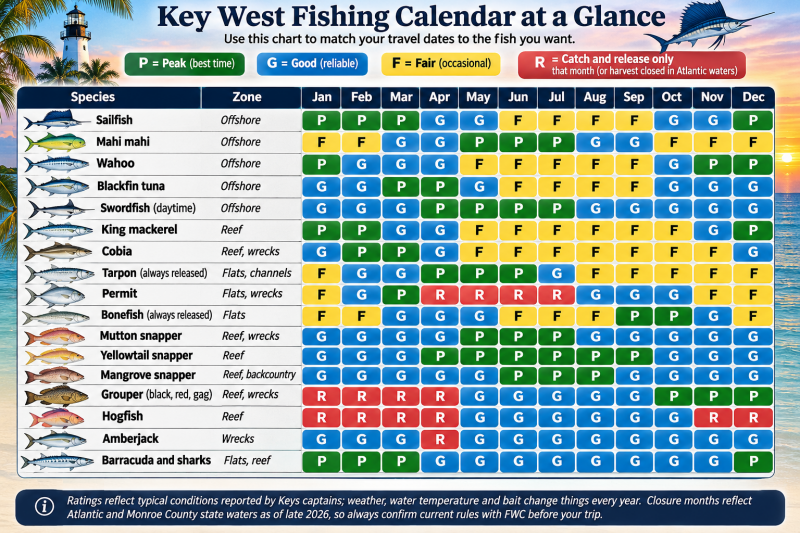
Key West Fishing Calendar at a Glance
Use this chart to match your travel dates to the fish you want. P = peak, G = good, F = fair or occasional, R = catch and release only that month (or harvest closed in Atlantic waters).
Winter Fishing in Key West (December, January, February)
Winter is sailfish season in Key West, and it is also the best time of year to escape the cold and fish in a T shirt. Cold fronts push down the peninsula, cool the water a few degrees and stack bait along the reef. The predators follow.
Expect breezy days after a front passes, with calm, gorgeous stretches in between. A flexible captain will pick the right days and the right side of the island.
December
December kicks off prime sailfish season. Captains slow troll or kite fish live ballyhoo and pilchards along the edge of the reef in 120 to 250 feet of water, and multiple hookup days are possible.
Wahoo are at their best in late fall and early winter, and high speed trolling over the reef drop off produces the biggest bites. King mackerel move in thick on the reef and wrecks, and cero mackerel keep light tackle anglers busy. On the flats, big barracuda and sharks make winter sight fishing a blast.
Insider tip: Book the day after a cold front clears. The wind may still be up, but the sailfish bite is often at its hottest.
January
January is peak sailfish, kingfish and wahoo time. Blackfin tuna feed on the wrecks and humps, and the reef stays loaded with yellowtail and mutton snapper for anglers who want dinner.
One big rule change matters here: shallow water grouper close January 1 through April 30 in all Atlantic state and federal waters, including all state waters off Monroe County on both the Atlantic and Gulf sides. That covers black, gag, red, scamp, yellowfin and other shallow water grouper. You can still catch and release them, and snapper stay open.
Insider tip: Winter is the season to try a Dry Tortugas or Gulf Shipwreck trip on calm days, when cobia and big snapper hold on structure to the west.
February
February is one of the most well rounded months to fish Key West. Sailfish are still on fire offshore, cobia show up around wrecks and often follow rays and sharks, and early tarpon begin rolling in the channels and harbor as the water warms.
Permit start to school on the wrecks late in the month, and the reef keeps producing snapper. Spiny lobster season is still open through March 31 for anyone who wants to snorkel for their own dinner.
Insider tip: Ask your captain about a split day: a few hours trolling for sailfish, then a stop on the reef to fill the cooler with snapper.
Best winter targets
- Sailfish, wahoo and king mackerel offshore and on the reef
- Cobia and blackfin tuna on wrecks
- Yellowtail and mutton snapper on the reef
- Barracuda and sharks on the flats
- Grouper as catch and release only (January through April)
Spring Fishing in Key West (March, April, May)
If you can only pick one season, pick spring. March through May is when the most species overlap in Key West: sailfish are still around, mahi arrive, tuna are thick, and the famous tarpon migration hits its peak. Winds settle, the water warms into the high 70s, and offshore days get calmer.
Spring is also high season for bookings. The best captains and dates fill early, so plan ahead.
March
March is a crossover month with something for every angler. Sailfish are still biting offshore, blackfin tuna and cobia are at their best, and the first mahi of the year start showing up in the blue water.
On the flats, permit and bonefish get active as the water warms, and tarpon begin stacking up in the channels and around the bridges. Spiny lobster season closes April 1, so March is your last shot at bugs until summer.
Insider tip: March is a great month for a full day mixed bag trip: troll offshore in the morning and fish the reef or a wreck in the afternoon.
April
April is when Key West tarpon season really takes off. Keys guides consistently name April, May and June as the top three months, with big pushes of migrating fish starting once the water hits about 79 degrees. Tarpon of 70 to 150 pounds roll through the channels, harbors and ocean side flats, and they jump like nothing else you will ever hook.
Offshore, mahi numbers climb, tuna are thick, and late season sailfish are still possible. Daytime swordfishing, deep dropping baits to the bottom in 1,500 feet or more, starts its best stretch.
Know these April rules before you go:
- Permit: harvest closes April 1 through July 31 inside the Special Permit Zone, which covers all of the Florida Keys. You can still catch and release permit, and spring is a fantastic time to do it.
- Western Dry Rocks: all fishing is prohibited April 1 through July 31 in a 1 square mile spawning area about 10 miles southwest of Key West. Your captain will fish around it.
- Greater amberjack: recreational harvest is closed in Atlantic waters for the month of April.
- Grouper: still catch and release only through April 30.
Insider tip: Tarpon fishing is often best at dawn, dusk and even after dark on a moving tide. Ask about a sunset tarpon trip.
May
May is widely considered one of the best fishing months in Key West. The tarpon migration is in full swing, mahi are running offshore in big numbers, and mutton and mangrove snapper begin gathering on the reef to spawn around the full moon.
May 1 also reopens a lot of the cooler: shallow water grouper, greater amberjack and hogfish all open to recreational harvest in Atlantic state waters, including the Florida Keys.
Insider tip: For mahi, look for weed lines, floating debris and birds working the surface. A good captain runs and guns until the boat finds the fish.
Best spring targets
- Tarpon (catch and release) in the channels, harbor and flats
- Mahi, blackfin tuna and late season sailfish offshore
- Daytime swordfish on the deep drop
- Permit (catch and release April through July) and bonefish on the flats
- Mutton, mangrove and yellowtail snapper on the reef, with grouper reopening May 1
Summer Fishing in Key West (June, July, August)
Summer is mahi season and snapper season in Key West. The seas are usually flat calm in the mornings, the water is bathtub warm, and the crowds thin out after spring break. Afternoon thunderstorms are common, so morning trips are the move.
Highs run around 90 degrees, so bring sun protection, plenty of water and a hat.
June
June is one of the best mahi months of the year. Schools of "schoolie" dolphin and big bull mahi feed along weed lines offshore, and trolling ballyhoo or casting to a school can fill a fish box fast. Wahoo, blackfin tuna and daytime swordfish round out the offshore menu.
Tarpon are still here in good numbers early in the month, and the mutton snapper spawn peaks around the full moons of June and July. Grouper are open again on the reef and wrecks.
Insider tip: When the captain hooks a mahi, keep it in the water near the boat. The rest of the school usually follows, and everyone gets a fish.
July
July is all about snapper and mahi. Mangrove snapper bite best in the summer heat, especially at night and on the reef, and yellowtail are thick and hungry. Offshore, the mahi run continues and swordfishing stays strong.
The last Wednesday and Thursday of July bring lobster mini season, a two day recreational sport season before the commercial traps go in. In 2026 it ran July 29 and 30. The limit in Monroe County is 6 per person per day, night diving is prohibited in Monroe County during those two days, and you need a Florida saltwater fishing license plus a spiny lobster permit. It is the busiest boating week of the year in the Keys, so book early.
Insider tip: A half day reef trip in July is perfect for families. Steady snapper action, calm water, and you are back in time for lunch.
August
August opens the regular spiny lobster season on August 6, which runs through March 31. Permit harvest reopens inside the Special Permit Zone on August 1, and Western Dry Rocks reopens to fishing. Offshore, mahi are still around, though the biggest bulls have usually moved on.
This is the heart of the off season for tourism, which means quieter docks and more open dates. Keep an eye on the tropics during hurricane season, and choose a captain who will reschedule if the weather turns.
Insider tip: Combine a morning reef fishing trip with a snorkel stop. In August, you can often grab a few lobster and a cooler of snapper on the same charter.
Best summer targets
- Mahi, wahoo, blackfin tuna and swordfish offshore
- Mutton, mangrove and yellowtail snapper on the reef
- Grouper on the reef and wrecks
- Tarpon early in the summer
- Spiny lobster during mini season and from August 6
Fall Fishing in Key West (September, October, November)
Fall is Key West's best kept fishing secret. The summer heat breaks, the island quiets down, and the fishing picks up on every front: bonefish on the flats, grouper on the reef, and the first wahoo and sailfish of the new season offshore.
September and early October are still hurricane season, so build some flexibility into your plans. By November, the weather is about as good as it gets.
September
September is one of the quietest months on the water, and that is exactly why local anglers love it. Bonefish fishing peaks as big fish tail on the flats, and permit are back on the wrecks and flats with harvest open again.
On the reef, mangrove and yellowtail snapper keep biting, and grouper action improves as the water starts to cool. Offshore, swordfish remain a solid daytime target and late mahi are possible.
Insider tip: September is the best month to find open dates with top captains. If your schedule is flexible, this is when to book.
October
October brings cooler mornings and a new wave of fish. The first good fall pushes of sailfish and wahoo show up along the reef edge, blackfin tuna return to the humps and wrecks, and bonefish fishing on the flats is still excellent.
Grouper fishing really heats up in October, with black and red grouper chewing on the reef and wrecks. Stone crab season opens October 15, so the island's favorite dinner is back on the menu too.
Insider tip: Fall grouper fishing is all about live bait and heavy drag. Once a grouper turns its head, you have seconds to pull it away from the rocks.
November
November is quietly one of the best all around months to fish Key West. Wahoo are at their peak, sailfish are building toward their winter run, king mackerel arrive on the reef, and grouper fishing is at its best before the January closure.
The weather is comfortable, the water is still warm enough to swim, and the island is calm before the holiday rush. It is a great month for a multi day fishing and cruising getaway.
Insider tip: In late fall, ask your captain to work the reef edge with live bait. One drift can produce a sailfish, a kingfish and a grouper.
Best fall targets
- Wahoo, sailfish and blackfin tuna offshore
- Black and red grouper on the reef and wrecks
- Bonefish and permit on the flats
- Mangrove, yellowtail and mutton snapper year round on the reef
- King mackerel arriving in November